
Understanding Kitchen Cabinet Colors
Choosing the right kitchen cabinet color sets the tone for your entire space. It’s more than just picking a shade. it’s about how the color works with lighting, cabinet style. And even your mood. Neutral kitchen cabinets like soft grays or creams create calm and timeless vibes, while bold cabinet colors bring energy and personality.
Color psychology kitchen experts say that colors influence how we feel in a room. For example, white kitchen cabinets often make spaces feel clean and open. Dark kitchen cabinets add drama and warmth but can shrink the space if not balanced well. Think about how you want your kitchen to feel before deciding.
- Neutral colors suit most styles and are easy to update.
- Bold colors add strong visual impact but need careful pairing.
- Lighting changes how colors look throughout the day.
Modern Kitchen Cabinet Colors and Trends
Kitchen cabinet color trends change. But some ideas keep coming back. Modern kitchen cabinet colors often mix classic shades with fresh touches. Two-tone kitchen cabinets are a hit—think soft pastel cabinet colors on top paired with darker bases. This style adds contrast and makes your kitchen pop without overwhelming it.
Another trend is eclectic kitchen color schemes. These mix unexpected colors and finishes for a unique look. You might see soft pastels combined with bold cabinet colors or contrasting cabinet colors on different sections. The key is color harmony and balance.
| Trend | Typical Colors | Effect |
|---|---|---|
| Two-tone Cabinets | Soft pastels + Dark shades | Visual contrast & depth |
| Neutral Cabinets | Gray, Cream, White | Timeless & versatile |
| Bold Colors | Navy, Forest Green | Strong personality |
Paint Finishes for Kitchen Cabinets
Not all paint finishes are the same. The finish affects how durable and easy to clean your cabinets are. Glossy finishes reflect more light and highlight brush strokes, giving a modern look. Satin and semi-gloss finishes offer a balance—they resist stains well and show less wear. Matte finishes bring a soft, natural feel but can be harder to clean.
Think about your kitchen’s use and lighting. If your kitchen is bright, a semi-gloss finish on white kitchen cabinets can brighten the space more. In darker kitchens, a satin finish helps avoid glare while maintaining color depth.
- Glossy: Pros – Bright, easy to wipe. Cons – Shows flaws
- Satin: Pros – Durable, less glare. Cons – Slightly less reflective
- Matte: Pros – Soft look. Cons – Harder to clean
Choosing Cabinet Colors for Small Kitchens
Small kitchens need smart color choices to feel larger and welcoming. Light neutral kitchen cabinets are usually best—they reflect light and open up the space. But here’s the thing: you don’t have to stick to plain white. Soft pastel cabinet colors like pale blue or mint can add personality without shrinking the room.
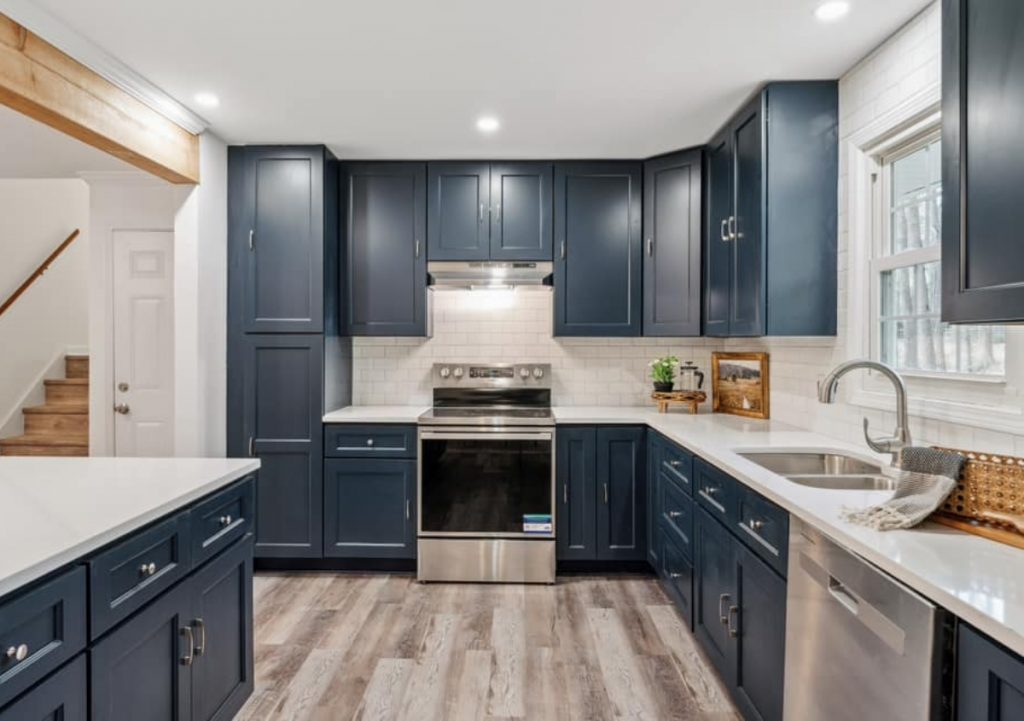
Two-tone kitchen cabinets help too. Having lighter colors on the upper cabinets and darker shades below creates a sense of height and depth. Pair this with matching cabinets and countertop colors to keep the kitchen looking cohesive and spacious.
| Color Choice | Visual Impact | Best Finish |
|---|---|---|
| White Cabinets | Expands space | Semi-gloss |
| Soft Pastels | Adds subtle color | Matte or Satin |
| Dark Cabinets (lower) | Creates depth | Satin |
Color Coordination Between Cabinets and Countertops
The relationship between cabinet colors and countertops is crucial. Clashing colors can confuse the eye, while harmony creates a smooth flow. A classic combo is white kitchen cabinets with gray or marble countertops. Dark kitchen cabinets pair well with warm wood or light quartz surfaces.
For those bold enough, contrasting cabinet colors with countertops can create a modern, eclectic vibe. Just make sure the colors complement each other by using a shared tone or neutral base. Check out Kitchen Cabinet Color Gallery for real-life examples that inspire.
| Cabinet Color | Recommended Countertop | Effect |
|---|---|---|
| White | Gray Marble | Clean & classic |
| Dark Brown | Light Quartz | Warmth & contrast |
| Soft Pastel | Neutral Stone | Subtle & balanced |
Cabinet Materials and Hardware in Color Choices
The material of your cabinets also affects color and finish choices. Wood cabinets absorb stain and paint differently than MDF or laminate. For instance, natural wood grain shines through with stain finishes, which highlights the texture. Paint covers laminate better but might need special primers.
Don’t forget cabinet hardware. Handles and knobs can complement or contrast with cabinet colors. Brushed nickel suits light or neutral cabinets, while black hardware works well with white or bold cabinet colors. Coordinating hardware with cabinet colors and finishes adds polish to your kitchen’s look.

- Match paint type to cabinet material
- Choose hardware that highlights cabinet color
- Consider durability and cleaning ease
Cabinet Color and Lighting: Creating the Right Mood
Lighting conditions dramatically change how cabinet colors look. Warm lights bring out yellows and reds in paint, while cool lights highlight blues and greens. The truth is, you should test paint samples under your kitchen’s lighting before finalizing.
Proper lighting can enhance cabinet finishes too. Glossy finishes reflect light, creating brightness. Matte finishes absorb it, softening the space. For kitchens with limited natural light, lighter cabinet colors with reflective finishes can make a big difference.
Maintenance: Paint vs Stain and Cabinet Refinishing
When it comes to upkeep, paint and stain have pros and cons. Painted cabinets are easier to clean and repaint but may show scratches more. Stained cabinets show wear less and enhance wood grain but can be harder to refinish.
Cabinet refinishing extends your kitchen’s life. Using UV protection paint helps prevent color fading. Regular cleaning with gentle products keeps finishes looking fresh. Knowing the right maintenance for your cabinet style and color can save money over time.
- Skipping test samples under your kitchen lighting
- Choosing paint finishes that don’t match kitchen use
- Ignoring cabinet hardware in the overall color scheme
For more inspiration and expert guidance on stylish and practical kitchen cabinetry, explore our detailed cabinet ideas and styles. You can also discover how to coordinate colors and materials for a stunning kitchen by checking out expert kitchen design ideas. If you want to complement your cabinet colors with the right flooring or backsplash, our kitchen tiles trends for 2024 article is a great resource.
Frequently Asked Questions
What are the most popular kitchen cabinet paint colors?
White, soft pastels, and dark shades like navy and charcoal are popular choices. These colors suit various kitchen designs and offer timeless appeal.
How do lighting conditions affect kitchen cabinet colors?
Lighting changes how colors appear. Natural light can make colors look brighter, while dim lighting may deepen hues. Considering kitchen cabinet color and lighting together helps achieve the desired mood.
What is the difference between paint and stain for cabinets?
Paint covers the cabinet surface and offers more color options. Stain enhances the wood’s natural grain and tone. Paint is easier for bold colors, while stain suits natural wood finishes.
Can two-tone kitchen cabinets improve small kitchen spaces?
Yes. Using contrasting cabinet colors or two-tone schemes can create depth and visual interest. Light colors on upper cabinets with darker tones below often optimize space and balance.
How often should kitchen cabinets be refinished or repainted?
Typically, kitchen cabinets need refinishing or repainting every 5 to 10 years, depending on wear, paint durability, and maintenance. Using UV protection paint can extend their lifespan.
